


Finding Their Voice Through "The Trojan Women"

Three LaGuardia students reflect on performance, growth, and finding community through LPAC’s collaboration with Eclipses Group Theater NY
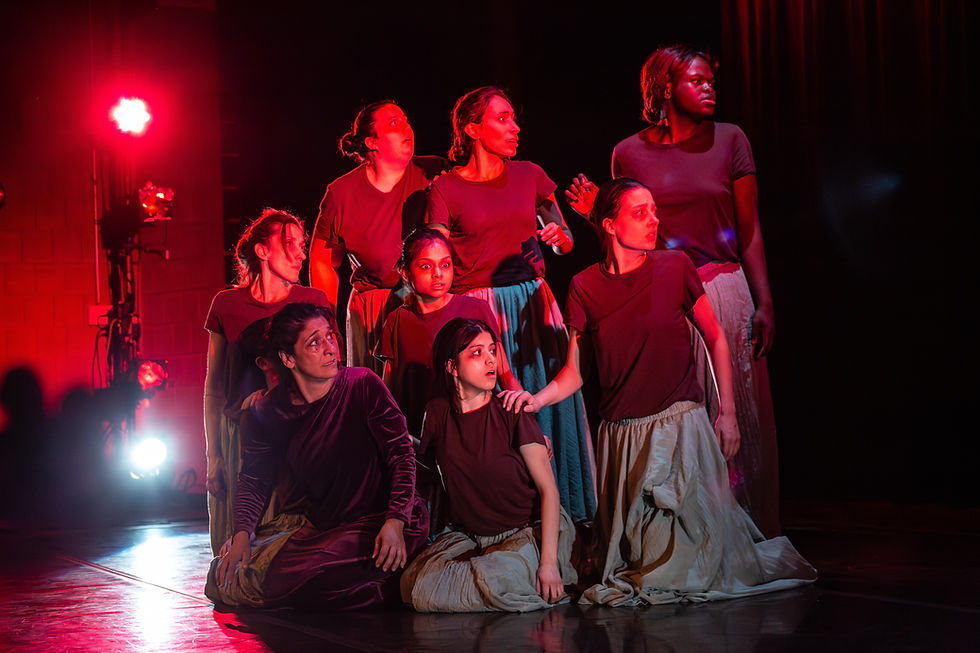
More than two thousand years after it was first performed, Euripides’ The Trojan Women continues to resonate through its portrayal of grief, displacement, survival, and the devastating human cost of war. This spring, LaGuardia Performing Arts Center, in collaboration with Eclipses Group Theater NY, brings the timeless Greek tragedy to The Little Theater through a multicultural production directed by Ioanna Katsarou, featuring a new translation and original music by Demetri Bonaros.
Alongside a cast of professional actors and artists several LaGuardia Community College students joined the production as members of the chorus, contributing not only their performances but also their personal experiences, artistic voices, and emotional vulnerability to the work. For many of them, The Trojan Women became a space for growth, discovery, and artistic transformation.
Safwana Protikkha: “I Am an Actor.”
For Safwana Protikkha, a former film student at LaGuardia Community College originally from Dhaka, Bangladesh, theater was something she found through the opportunities offered at LaGuardia’s theater program. Encouraged by friends, peers, and Professor Sertitch, she auditioned for The Trojan Women and was cast in the chorus.
What followed became one of the most transformative artistic experiences of her life.
Safwana describes the production as “a blessing,” recalling the kindness and dedication of the creative team throughout the rehearsal process. She credits director Ioanna Katsarou and composer Demetri Bonaros not only for guiding the cast artistically, but also for creating an environment rooted in encouragement and care. She also found herself inspired by the professional actors around her, observing both their craft and the way they carried themselves with professionalism and generosity.
One of Safwana’s greatest challenges was balancing the many demands of the production at once: singing, dancing, and acting simultaneously. Through choreographer Elian Wigisser’s movement work, she began to understand how emotion could live within physical expression, deepening her connection to performance and to herself.
For Safwana, the experience carried a particularly personal significance. Before moving to the United States, she believed she had left behind her dream of singing on stage. The Trojan Women marked the first time she sang publicly in the U.S., reopening a door she once thought had closed forever.
One rehearsal moment remains especially vivid in her memory. After instinctively rushing to help pick up a fallen keyboard during warmups, she remembers being stopped by the stage manager and told, “You’re an actor!” It was a simple moment, but one that deeply shifted how she saw herself.
“Nobody had addressed me by that title before,” she reflected. “I am an actor.”

Zari Adeola: Watching the Production Come to Life
For Zari Adeola, joining The Trojan Women began through auditions with LaGuardia’s theater program. Though already familiar with singing harmonies, the production challenged her musically in entirely new ways. Working with Demetri Bonaros introduced her to harmonies outside of her comfort zone, pushing her to grow both technically and artistically.
“At first it was hard,” she shared, “but I got it in the end.”
Zari describes the rehearsal process as both challenging and rewarding. While learning new vocal structures demanded patience and focus, she found fulfillment in watching the production gradually evolve into a fully realized performance.
“What was rewarding is seeing the whole thing come together and come to life,” she said. “It has been so good to see.”
One memory stands out clearly for her: witnessing actress Ruth Łchav’aya K’isen Miller rehearse as Andromache for the first time at the Hellenic Cultural Center.
“It was so beautiful and so good,” Zari recalled. “I definitely thought to myself, ‘I will always remember this.’”
Looking ahead, Zari hopes to continue pursuing theater professionally after graduation, imagining herself one day performing in large-scale productions that bring her both joy and fulfillment.

Madelaine Guanga: Building Community Through Performance
Madelaine Guanga, a theater major from Santa Isabel, Ecuador, came to LaGuardia Community College carrying a longtime love for acting and music nurtured by the support of her family. When auditions for The Trojan Women were announced through the collaboration between LPAC and Eclipses Group Theater NY, she decided to take a chance and audition.
Soon after, she received an invitation from director Ioanna Katsarou to join the production as part of the chorus.
“With excitement and gratitude, I accepted it,” she said.
Madelaine remembers arriving early to one of the first rehearsals and feeling intimidated at first, unsure of how she would fit into the group. Over time, however, rehearsals became a place of connection and mutual support as the ensemble grew more comfortable with one another.
One of the biggest challenges for her was understanding the script and music, especially navigating unfamiliar words and phrases within the text. Through the guidance of Demetri Bonaros and Ioanna Katsarou, she gradually began to understand not only the meaning behind the language, but also the emotional weight carried by the women of Troy.
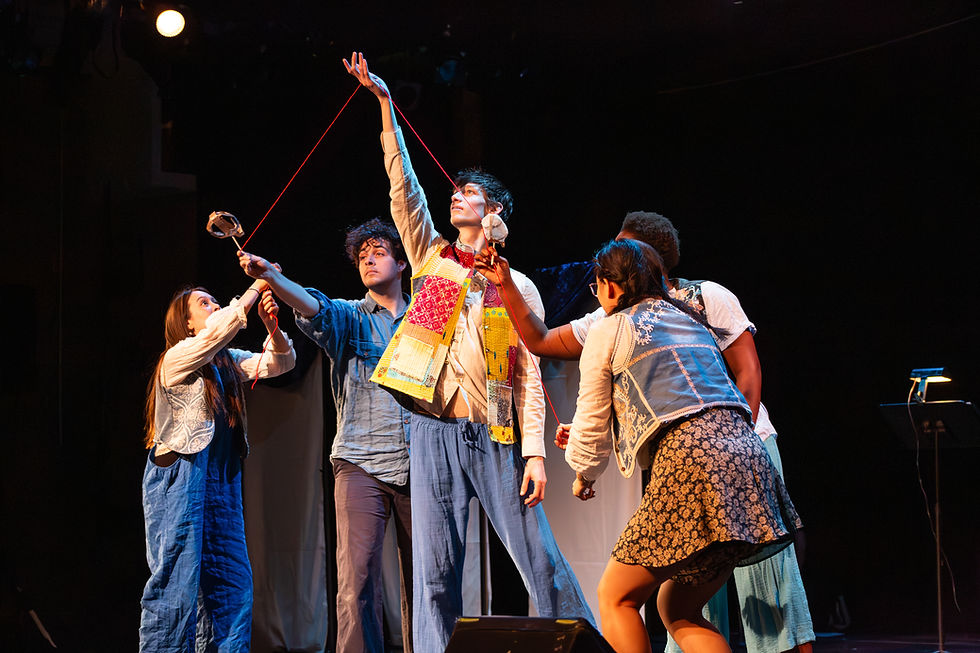
For Madelaine, one of the most unforgettable moments in the production is a choreography sequence in which the women attempt to protect Andromache’s child during a combat scene. The moment, she explained, captures the desperation, courage, and determination of the Trojan women as they fight to preserve hope amid destruction.
Looking toward the future, Madelaine dreams of traveling the world through theater, creating original work, and helping other artists bring their stories to life.
“I wish I could spread love and compassion around people,” she said, “by collaborating to build a community where every story is honored and empathy is shared.”
A Shared Stage
At LPAC, productions like The Trojan Women continue to create opportunities for students to learn alongside professionals, connect across cultures, and bring new life to stories that still speak powerfully to the present day.
Photos Credit - Ryan Prado
To learn more about all our residencies and festivals, stay connected!
Subscribe to our mailing list and don’t forget to follow us on Instagram for behind-the-scenes content, artist highlights, and upcoming events.

Comments